
Buffalo Behavior Explained: Herd Life, Physical Power, Charging Instincts, and Attack Patterns
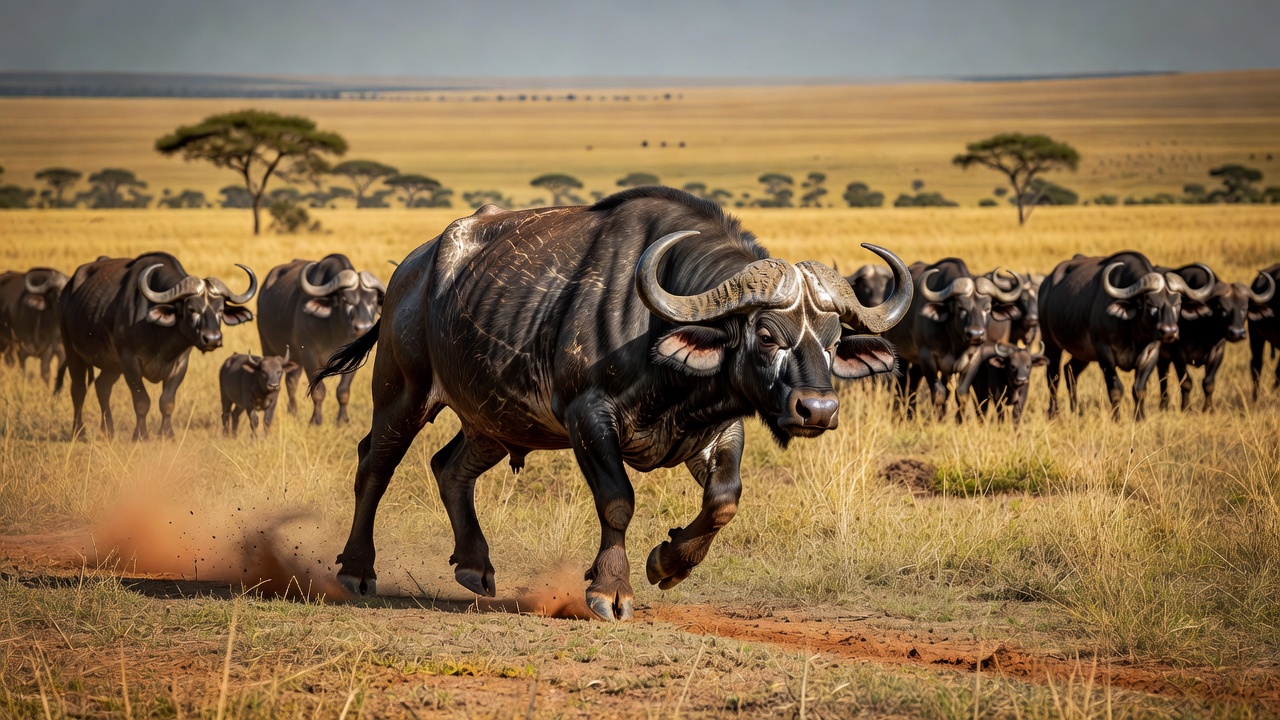
A wounded Cape buffalo will circle back through thick brush to ambush the hunter tracking it. This single fact unsettles professional guides more than any statistic about lions or crocodiles. The animal that grazes calmly in open grassland by day becomes, when threatened, one of the most deliberate and dangerous adversaries on the African continent - not because it is fast or stealthy, but because it thinks, waits, and strikes with purpose.
Most people picture buffalo as slow-moving cattle with oversized horns, an image that has gotten careless hunters and unlucky tourists killed. The reality is far more layered. Herd dynamics shape when and how these animals defend themselves. Physical architecture - bone density, horn structure, muscle mass - dictates what happens on impact. And the charge itself, often described by survivors as shockingly fast and eerily silent until the final seconds, follows patterns experienced trackers learn to read. Some hunting outfitters even reference this reputation in unexpected places, including gaming platforms where you can read more about buffalo-themed slot experiences inspired by the animal's fearsome image.
What follows breaks down the anatomy, social structure, and combat instincts that make this animal a genuine study in wild power.
Understanding Buffalo Herd Characteristics
Buffalo society is not a loose collection of grazing animals. It operates on a structured hierarchy that determines everything from feeding order to defensive formation. Herds can range from a dozen individuals to several hundred, and within that group, age, sex, and reproductive status determine an animal's role.
Social Hierarchy Within the Herd
Dominant females typically lead daily movement decisions - where to graze, when to move to water, when to retreat from danger. Bulls compete for breeding rights through ritualized displays and occasional violent clashes, but outside mating season they often tolerate each other in loose bachelor groups. This hierarchy is not rigid theater; it has survival consequences. A herd that moves cohesively under experienced leadership avoids predators far more effectively than a fragmented one.
Herd Size and Its Effect on Safety
Larger herds offer statistical safety in numbers, diluting individual risk from predation. But size also creates vulnerability at the edges - young calves and aging bulls pushed to the periphery become prime targets for lion prides. Buffalo herd characteristics shift seasonally: during calving periods, groups tighten their formation and increase vigilance, while during dry-season migrations toward water sources, herds may stretch thin across long distances.
Communication and Group Coordination
Buffalo communicate through a mix of vocalizations, body posture, and scent marking. A snort or raised head can trigger an entire herd's attention within seconds. This coordinated awareness is why isolated buffalo - bulls expelled from the group due to age or injury - behave so differently from herd members. Alone, they lose the early-warning network the group provides, which partly explains why solitary bulls are statistically the most dangerous to encounter.
Physical Features That Define the Species
Buffalo physical features are built around one evolutionary priority: surviving direct confrontation with Africa's largest predators, including lions hunting in coordinated prides.
Body Size, Weight, and Muscle Structure
A mature bull can weigh close to a ton, with dense muscle concentrated around the shoulders and neck. This front-heavy build isn't accidental - it powers the head-first collisions that define how the animal fights. Unlike sprinting predators built for speed and agility, buffalo are built for mass and momentum.
The Boss and Horn Architecture
The most recognizable feature is the "boss" - the fused, helmet-like plate of horn covering the top of the skull in mature bulls. This structure alone can absorb tremendous impact, functioning almost like natural armor during head-to-head clashes with rivals or predators. The horns curve outward and downward before hooking upward, creating a shape capable of hooking, tossing, and pinning.
Hide, Hooves, and Sensory Adaptations
Buffalo hide is remarkably thick, offering protection against claws and bites that would seriously wound thinner-skinned animals. Their hooves are broad and durable, suited to covering long distances over rough terrain. Eyesight is moderate, but hearing and smell are sharp, often detecting a threat well before visual confirmation - a trait that shapes how an ambush unfolds.
Buffalo Charging Behavior: What Triggers It
Charging is not random aggression. It is a calculated response rooted in threat assessment, and understanding the triggers separates informed field behavior from dangerous guesswork.
Defensive Versus Aggressive Charges
Most charges are defensive - a response to a perceived threat to the animal itself, a calf, or the herd. True unprovoked aggression is rare. A buffalo that feels cornered, startled at close range, or protective of young is far more likely to charge than one simply grazing at a distance.
Warning Signs Before a Charge
Experienced trackers watch for specific cues: a raised head followed by lowering into a fighting posture, ears pinned back, and a fixed stare toward the perceived threat. The animal may paw the ground or shift its weight forward. These signals typically appear seconds before commitment to a full charge, leaving very little time to react.
Speed and Distance Covered During a Charge
Once committed, a buffalo can reach considerable speed over short distances, closing gaps that seem safe far faster than expected. This is the core danger of buffalo charging behavior - the animal looks slow and heavy until the moment it isn't, and by then the distance advantage a person assumed they had is often gone.
Buffalo Attack Patterns and Tactics
What sets buffalo apart from most large herbivores is tactical persistence. An attack rarely ends with a single charge.
The Ambush Instinct
Wounded buffalo are famous among hunters and guides for doubling back on their own trail, hiding in dense cover, and waiting for a pursuer to close the distance before launching a surprise attack. This behavior demonstrates a level of tactical patience uncommon among prey animals.
Group Defense Against Predators
When a herd faces a lion pride, individuals often form a loose defensive perimeter, horns facing outward, protecting calves at the center. Dominant bulls may break formation to confront a predator directly, using their mass and horns to gore or toss an attacking lion. This coordinated response is a major reason lions frequently fail when targeting a healthy, alert herd.
Repeated Goring Behavior
Buffalo attack patterns often include repeated goring even after a target is down - the animal doesn't simply strike once and retreat. It may return multiple times, tossing and trampling, a behavior rooted in eliminating a threat completely rather than merely deterring it.
- Defensive charges triggered by proximity or perceived threat to calves
- Ambush behavior in wounded or cornered individuals
- Coordinated herd defense against predator groups
- Repeated goring and trampling until the threat is neutralized
Buffalo Strength and Endurance in the Wild
Strength alone wouldn't make buffalo formidable without the stamina to sustain confrontation and long-distance movement across harsh terrain.
Raw Physical Power
The neck and shoulder muscles generate enough force to toss a lion several feet through the air. This raw power, combined with the weight behind each movement, means even a glancing hit from a buffalo can cause severe injury to a predator many times more agile.
Endurance Across Long Migrations
Buffalo strength and endurance also show in their capacity for sustained movement. Herds travel long distances between grazing grounds and water sources, particularly during dry seasons, without the rest patterns typical of ambush predators. This stamina supports both survival and the coordinated group movement essential to herd characteristics discussed earlier.
Recovery From Injury
Buffalo show notable resilience recovering from wounds that would incapacitate other large herbivores. Scarred, healed-over injuries are common on older bulls, evidence of past clashes with predators or rival males survived through sheer physical toughness.
Why Buffalo Are Considered Among Africa's Most Dangerous Animals
The combination of unpredictable charging behavior, tactical ambush instincts, and raw physical force places buffalo in a category few large herbivores occupy. Unlike predators that attack for food, a buffalo's aggression is defensive and territorial, which paradoxically makes it harder to predict and avoid.
Comparing Buffalo Danger to Other Large Mammals
Elephants and hippos are also responsible for serious incidents involving humans, but buffalo distinguish themselves through the deliberate, almost strategic nature of their attacks, particularly when wounded or isolated from the herd.
Lessons From Field Encounters
Professional guides consistently emphasize distance, wind direction, and reading herd body language as the primary tools for avoiding conflict - not speed or weaponry. Respecting the animal's space and recognizing early warning postures remains the most reliable defense against a charge.
Questions and Answers
Why do buffalo attack even when not directly provoked?
Buffalo often perceive sudden movement, unfamiliar scent, or close proximity as a threat, particularly when calves are nearby. What looks unprovoked to an observer is usually a defensive response to a signal the animal detected before the human noticed anything at all.
How fast can a buffalo actually charge?
Over short distances, a buffalo can reach speeds that easily outpace a running human, which is why the recommended safety distance in the wild is far greater than most people assume. The danger lies in how quickly that speed appears from what looks like a stationary, calm animal.
Is a solitary bull more dangerous than a full herd?
Yes, generally. Solitary bulls, often older animals pushed out of the group, lack the herd's collective vigilance and tend to be more defensive and unpredictable, making them a higher risk to unsuspecting hikers or hunters.
What should someone do if a buffalo charges?
Experienced guides recommend seeking solid cover such as a tree or vehicle immediately rather than attempting to outrun the animal. Standing ground without cover is rarely advised given the buffalo's mass and commitment once a charge begins.
Do buffalo herds actually protect injured members?
Yes, herds have been observed slowing movement or forming protective positions around injured or weakened individuals, particularly calves, reflecting the strong social cohesion that defines their group structure.
Why are buffalo horns shaped the way they are?
The curved shape combined with the fused "boss" at the skull's crown serves two purposes: absorbing impact during head-to-head clashes and enabling a hooking motion useful for tossing predators or rivals during confrontation.