
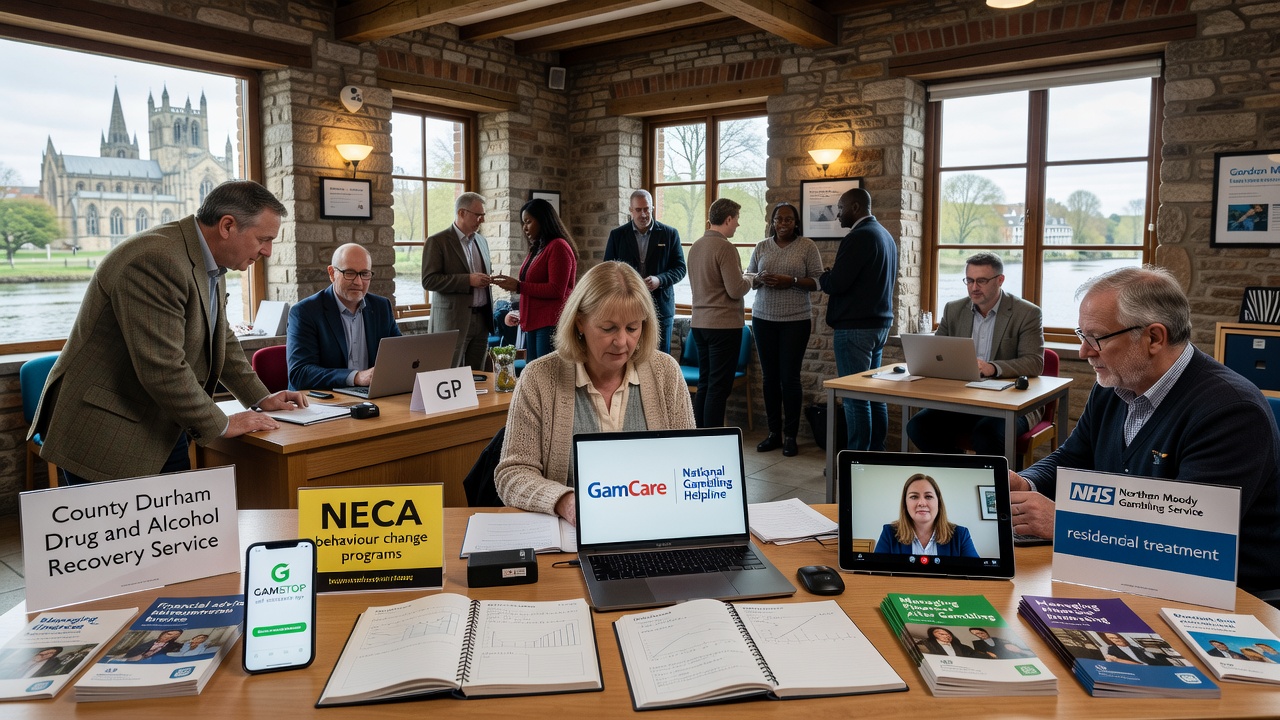
An estimated 23,755 people across County Durham are thought to be at moderate or higher risk of gambling harm, according to local public health assessment. That figure is a reminder that gambling-related distress is not a fringe issue but a public health concern with measurable reach, affecting finances, mental health, and family relationships across the region.
What counts as gambling harm
Gambling itself is straightforward: money or something of value is staked on an uncertain outcome, whether through sports betting, slot machines, or online games. The activity becomes harmful when it stops being contained. Losing control over spending or time, lying to family about the extent of betting, or feeling anxious and hopeless because of gambling are recognised warning signs. These harms rarely appear in isolation - financial strain often feeds mental health difficulties, which in turn can damage relationships and, in some cases, lead to criminal activity as people attempt to recover losses.
Understanding these signs matters because gambling harm frequently develops gradually. Unlike a single financial shock, it can build through repeated small decisions that feel manageable in the moment but accumulate into serious difficulty. That gradual pattern is part of why self-recognition can be difficult, and why external support services play a meaningful role.
A layered support system
Durham's response reflects a wider pattern seen across England, where gambling support operates on several levels rather than through a single service. Local generalist services, such as the County Durham Drug and Alcohol Recovery Service, treat gambling alongside other addictions, recognising the overlap in underlying behaviours. GPs and mental health services provide another route in, referring people to specialist care where needed. Community hubs act as a first point of contact for advice and signposting, useful for anyone unsure where to start.
Specialist provision sits above this. The NHS Northern Gambling Service delivers dedicated addiction therapy, while NECA works specifically on gambling-related advice and behaviour change. National organisations add a further layer: GamCare's helpline and live chat operate around the clock, the National Gambling Helpline offers direct phone support, and Gordon Moody provides residential treatment for more severe cases. This tiered structure allows people to enter support at whatever level matches their situation, whether that is a brief conversation or intensive treatment.
Practical steps and their limits
Alongside formal services, several practical measures can reduce risk. Self-exclusion tools such as GAMSTOP block access to online gambling sites, removing the ability to act on impulse. Tracking apps or journals can help identify triggers, such as particular times of day or emotional states that precede gambling sessions. Talking to a trusted friend, family member, or professional often serves as the first meaningful step, since isolation tends to reinforce harmful patterns. Where finances have already been affected, independent financial advice can help address debt separately from the gambling behaviour itself.
These tools work best in combination with professional support rather than as standalone fixes. Self-exclusion, for instance, only covers services a person actively signs up to, and determined individuals can find ways around it. That limitation is one reason public health teams frame these measures as part of a broader response rather than a complete solution.
Why local data matters
The 2025 Gambling Health Needs and Assets Assessment carried out by Durham's Public Health team reflects a growing recognition among local authorities that gambling harm needs to be measured and tracked, not assumed. Understanding the scale of risk in a specific area allows services to be resourced appropriately and helps identify gaps where provision is thin. For residents, the practical takeaway is that support exists at multiple levels, from a quiet conversation with a GP to specialist residential treatment, and reaching out early tends to make a meaningful difference to outcomes.