
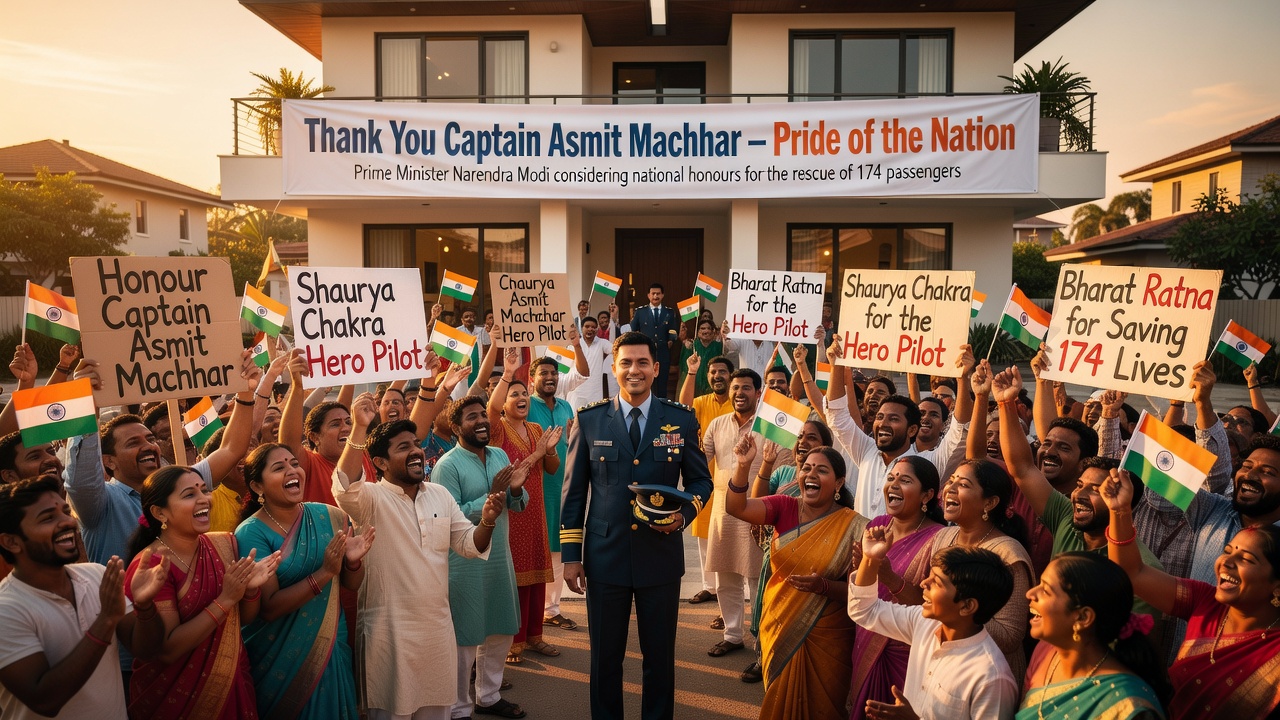
Residents gathered outside the home of Captain Asmit Machhar this week to applaud the pilot's conduct during an emergency that, according to those present, saved 174 lives aboard his aircraft. The gathering reflected a wider public sentiment that his actions deserve formal recognition at the highest level of government.
One speaker at the scene described the episode as a source of pride for the entire country, noting that the pilot had personally opened the cockpit and taken direct action to bring passengers to safety, reportedly at risk to himself. The crowd called on the central government and Prime Minister Narendra Modi to consider conferring honours such as the Shaurya Chakra or the Bharat Ratna in recognition of his conduct.
Why Public Recognition of Aviation Incidents Matters
Incidents involving pilot decision-making during in-flight emergencies tend to draw intense public attention because aviation safety sits at the intersection of technical skill, regulatory oversight, and individual judgment. When a crew member's actions are credited with preventing loss of life, the story resonates well beyond the immediate passengers involved - it becomes a reference point for how aviation training, cockpit protocols, and emergency response procedures are perceived by the flying public.
Civil aviation authorities typically conduct their own review of such incidents independent of public sentiment, examining cockpit data, crew communication, and adherence to safety procedures. Public calls for state honours, while reflecting genuine gratitude, usually follow a separate track from these technical reviews, which are designed to establish exactly what occurred and whether existing protocols functioned as intended.
The Role of National Honours in Civilian Recognition
India's honours system includes distinctions such as the Shaurya Chakra, generally associated with acts of gallantry, and the Bharat Ratna, the country's highest civilian award, reserved for exceptional and distinguished service. Whether either would apply to a civil aviation incident depends on established criteria and precedent, which are set by the government rather than by public petition. Historically, recognition for civil aviation personnel has followed formal evaluation processes rather than immediate public acclaim, even when that acclaim is substantial.
The public reaction in this case illustrates how quickly local sentiment can translate into broader calls for state action, particularly when an incident is framed as reflecting national competence or resilience on an international stage.
What Comes Next
Any formal recognition would rest with government bodies responsible for civilian and gallantry awards, following their own internal assessment procedures. Meanwhile, the aviation sector's own safety bodies would be expected to review the incident separately, focusing on what can be learned for training and emergency protocol rather than on commendation. Both processes, distinct as they are, speak to the same underlying concern: ensuring that commercial aviation remains accountable, transparent, and responsive when safety is tested in real time.