
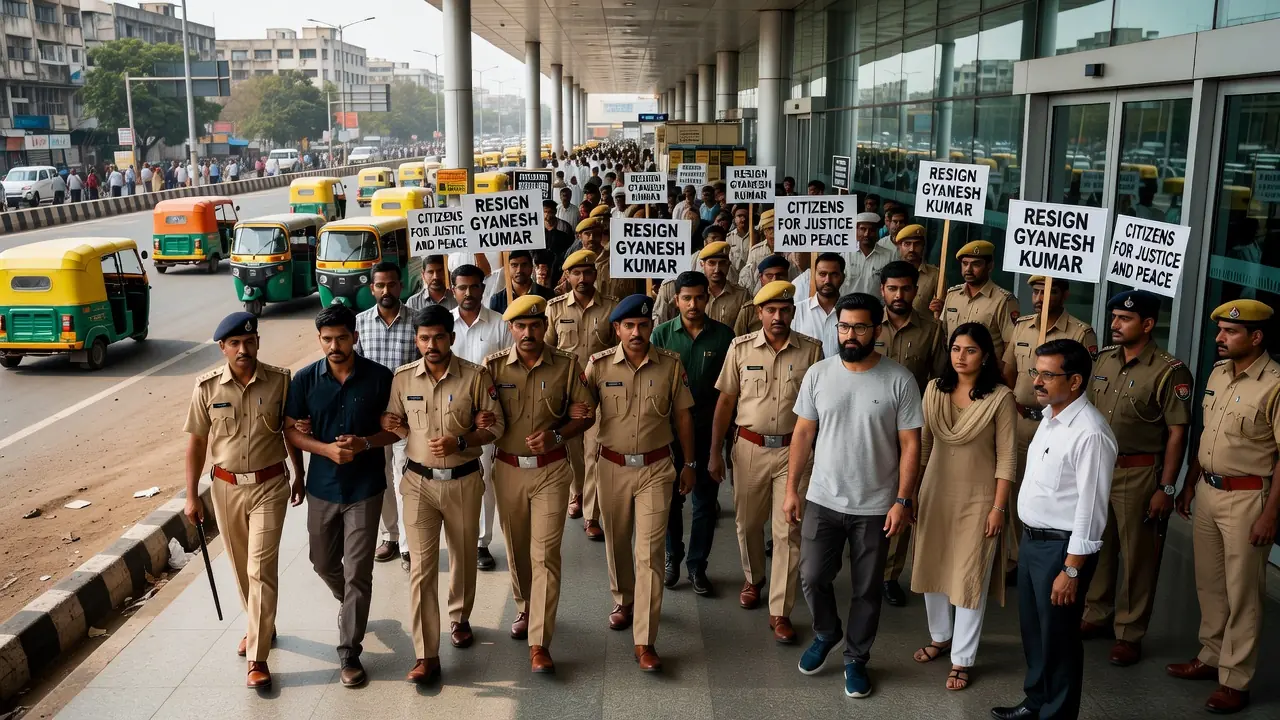
Police in Delhi detained several prominent voices tied to the Citizens for Justice and Peace campaign on the eve of a planned demonstration demanding the resignation of Chief Election Commissioner Gyanesh Kumar. Among those picked up were CJP members Abhijeet Dipke, Saurav Das and Ashutosh Ranka, reportedly removed from their flight shortly after landing, along with YouTuber Dhruv Rathee, influencer Kavya Karnatac and CJP legal head Ratna Singh. Delhi Police has stated that roughly 600 people have been detained across the city, a number that reportedly includes about 50 individuals described as having prior criminal records, as authorities tighten security ahead of the gathering.
What the detentions signal about protest rights
The sequence of events described by CJP and shared on video is notable less for its scale than for its timing: detentions before protesters even assembled. Dipke had publicly invoked Article 19 of the Constitution, which guarantees freedom of speech and the right to assemble peacefully, challenging authorities to arrest him if they intended to suppress the demonstration. Preemptive detention of organizers and commentators, rather than action taken during or after an unlawful assembly, raises a distinct legal and political question. Indian law permits police to act to prevent breaches of public order, but the threshold for doing so before any gathering has formed is where civil liberties groups and courts have historically drawn sharp lines.
Why the Election Commission has become a flashpoint
The protest's specific demand - the resignation of the Chief Election Commissioner - places it squarely within disputes over the independence and credibility of India's election machinery. The CEC oversees the conduct of national and state elections, and questions about the Commission's impartiality tend to surface most forcefully when political trust in electoral outcomes is already strained. A government moving to contain protest activity aimed at its own appointed election authority invites an uncomfortable comparison: enforcing public order versus appearing to shield an institution from scrutiny it is meant to withstand in a functioning democracy.
The role of digital influencers in political mobilization
Dhruv Rathee's detention is particularly significant given his reach - he has built an audience of millions through political commentary delivered almost entirely online. His involvement reflects a broader shift in Indian civic life, where YouTubers and social media influencers increasingly function as organizers and amplifiers of political movements, not just commentators. This blurs older distinctions between media figures and activists, and it changes how authorities calculate the risk and visibility of detaining someone. Action against a creator with a large following carries different public consequences than action against a lesser-known organizer, since it is documented, shared and debated at scale almost instantly.
Unanswered questions as the situation develops
Several core questions remain open and unresolved as reporting continues. Delhi Police's own figures - around 600 detentions plus a separate cohort flagged for alleged criminal history - have not been independently verified, nor has it been clarified how those with "criminal backgrounds" relate to the protest itself. Whether formal charges will follow, what legal grounds are being cited for detention before assembly, and how courts will eventually assess the constitutionality of these actions are all pending. What is clear is that the clash between state authority and protest rights, playing out in real time and amplified by social media, is likely to shape public debate on civil liberties well beyond this single demonstration.