
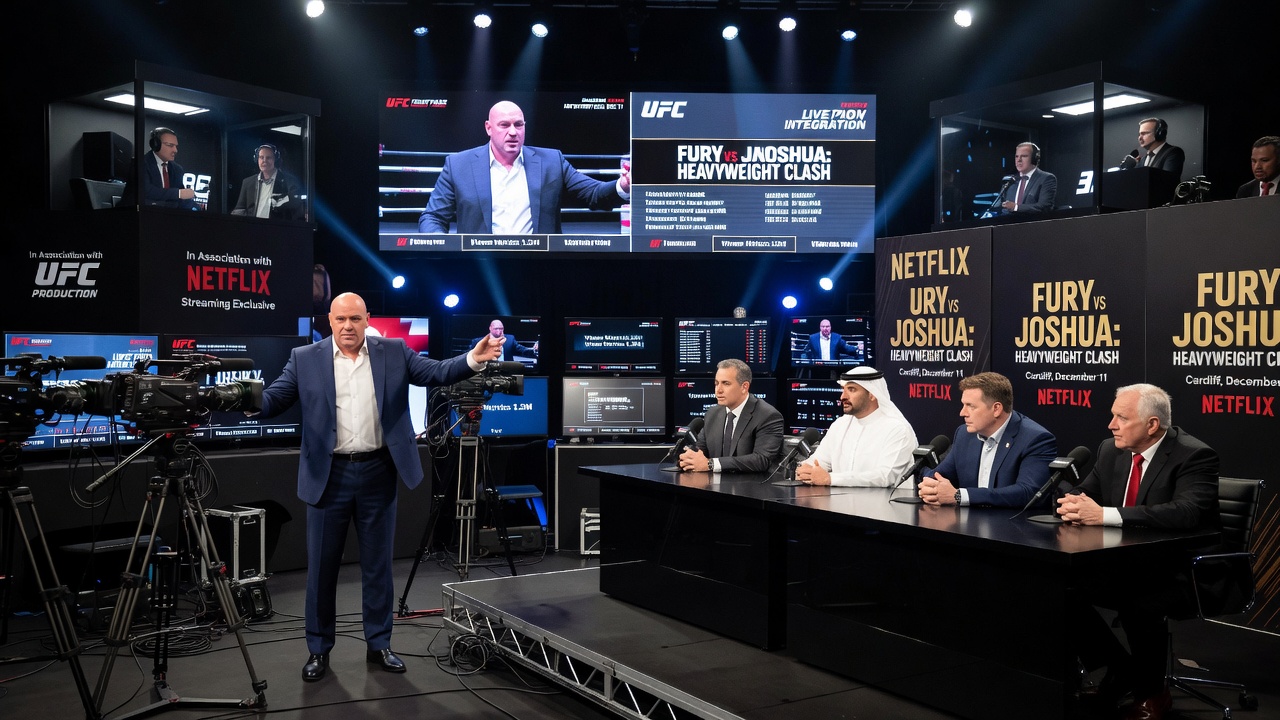
Dana White says he never left the Tyson Fury vs. Anthony Joshua picture, and the production credits back him up. The UFC CEO skipped Thursday's London press conference announcing the heavyweight bout, but his longtime business partner Nick Khan sat front and center beside Saudi backer Turki Alalshikh, while promoters Eddie Hearn and Frank Warren handled the stagecraft most fans associate with a traditional boxing build-up.
That absence became a talking point after Hearn publicly declared that White's involvement had amounted to one of boxing's "greatest PR disasters." White's response was blunt: he's not just promoting the card, his team is producing the broadcast itself for Netflix on Dec. 11 from Cardiff.
Why the Production Credit Matters
In combat sports, the distinction between promoting and producing is not cosmetic. A promoter negotiates the fight, markets it, and often controls the commercial relationship with fighters and venues. A production company builds the broadcast - camera operations, graphics, commentary, pacing, the entire viewer experience. UFC has spent years refining a globally recognized broadcast style, and handing that job to White's organization gives Zuffa Boxing a structural foothold in the event regardless of who stands at the press conference podium.
That arrangement also explains why Netflix's original release named White alongside the promotional team. Streaming platforms entering live sports, as Netflix has with this card, tend to prioritize production reliability over who gets top billing in a press release. A capable production partner reduces technical risk for a company still building its live-event infrastructure.
A Public Dispute Over Narrative Control
Hearn's comments framed the situation as a messaging failure by White and his partners. White rejected that framing outright, arguing that the facts of his involvement - promotion and production - were never in question, only the public perception of it. This kind of dispute is common when multiple commercial entities share credit on a single broadcast event: each side has an incentive to claim primary authorship in the eyes of fans and media.
For viewers, the disagreement is mostly cosmetic. What matters more is who controls the broadcast quality, scheduling, and commercial terms of a fight expected to draw significant global attention. UFC's production involvement suggests the promotion carries more structural weight than the press conference optics implied.
What It Signals for Boxing's Business Model
Combat sports promotion has grown increasingly fragmented, with streaming platforms, regional promoters, and outside capital - in this case Saudi-backed investment - all occupying different layers of a single event. Fury vs. Joshua reflects that shift: a UK-based promotional rivalry, a Saudi financial backer, a UFC production team, and a Netflix distribution deal, all under one broadcast. As these structures multiply, transparency about who actually controls production, scheduling, and commercial terms becomes more relevant to fans trying to understand where their subscription or viewing dollars go, and to industry observers tracking how traditional boxing promotion is being reshaped by outside entertainment and sports-business players.